
Growth Agriculture A Field Almanac
A timeline of how we feed the soil

From the first handful of ash
to a paddock of Liquid Blood & Bone.

For ten thousand years, growers have been in quiet negotiation with the ground beneath their feet - pairing plants with what the soil was missing. This is the long arc of fertiliser, from Neolithic middens to modern biological liquids.

~10,000 yrsof soil amendment
14 milestoneson the timeline
1 Australianliquid blood & bone
0% of history

Every fertiliser is an answer to the same question: what does the soil still need?

Fourteen moments, four eras, one long conversation with the ground.

Ancient Origins c. 8000 BC - 0 AD
Origins Fertile Crescent

Ash, middens and the first farms

In the fields of Neolithic Mesopotamia, the earliest growers notice that crops planted where the hearth-fire burned, or where kitchen scraps piled up, come back taller and darker green. Intentional or not, humanity starts putting carbon and minerals back into the soil.

Organic matterObservation
c. 8000 BC
Livestock Near East & Egypt

Manure enters the rotation

Once animals are domesticated, the connection is quickly drawn: dung feeds grass, grass feeds stock, stock feeds dung. Sheep, cattle and donkeys become a second crop, and their manure is carted back to cropping ground - the oldest deliberate fertiliser on record.

ManureNitrogenClosed loop
c. 6000 BC
Milestone Nile Valley

The silt of the Nile

Egyptian agriculture is built on a fertiliser delivered by flood. Each summer, the Nile deposits a fresh layer of mineral-rich silt across the valley - phosphorus, potassium, trace elements - and Egyptian grain feeds an empire. It is the first industrial-scale demonstration that minerals, not just manure, matter.

SiltP & KAnnual renewal
c. 3000 BC
Observation Mediterranean

Legumes & the fallow year

Greek and Roman farmers formalise what Mesopotamians had guessed at: resting a field - or better, sowing it to beans, vetch or lupins - restores its fertility. Nobody yet knows about nitrogen-fixing bacteria in root nodules, but crop rotation becomes written law in Rome's agricultural treatises.

LegumesRotationBiological N
c. 500 BC
Classical & Medieval 0 - 1700
Waste to wealth Han & Tang China

Night soil: the city fertilises the countryside

Chinese agriculture builds an entire logistics network around human waste - composted, aged, and returned to rice paddies and vegetable gardens. The practice keeps fertility high in densely populated valleys for two thousand years, long before Europe figures out that its cities are throwing away a resource.

CompostingUrban cycle
c. 200 AD
European system Medieval Europe

The three-field system

Medieval manors divide arable ground into three: winter grain, spring grain, and fallow grazed by livestock that drop manure onto it. This is the workhorse of European fertility for five centuries - labour-intensive, closed-loop, and eventually unable to feed cities that are starting to grow faster than their hinterland.

RotationGrazing
c. 800 AD
Industrial Chemistry 1800 - 1960
Seabird gold Peru → the world

The guano rush

European industrial cities, starved for fertiliser, discover vast cliffs of fossilised seabird droppings on the islands off Peru. Guano is 15% nitrogen and high in phosphorus. For fifty years it is one of the most valuable cargoes on the high seas - until the deposits are mined out and the world has to find another source.

GuanoConcentrated NPK
1840s
Milestone Hertfordshire, England

Superphosphate: the first manufactured fertiliser

John Bennet Lawes treats crushed bones - and later mineral rock phosphate - with sulphuric acid, producing a soluble phosphate fertiliser plants can use immediately. His Rothamsted patent in 1842 marks the beginning of the industrial fertiliser industry. Agriculture will never be the same.

SuperphosphateRothamsted1842
1842
Chemistry Giessen, Germany

Liebig's Law of the Minimum

Justus von Liebig proves that plant growth is limited not by the nutrients present in abundance, but by whichever is in shortest supply. Suddenly fertiliser becomes a diagnostic problem: work out what the soil lacks, and give it exactly that. The age of prescription nutrition begins.

LiebigLimiting factor
1840
Milestone Ludwigshafen, Germany

Haber–Bosch: nitrogen from the air

Fritz Haber and Carl Bosch work out how to combine atmospheric nitrogen with hydrogen under pressure and temperature, yielding ammonia at industrial scale. The process ends fertiliser scarcity forever - and today feeds an estimated half the people on Earth. It also marks the moment synthetic nitrogen eclipses the biological kind.

AmmoniaSynthetic N1909
1909
Global scale-up India, Mexico, Pakistan

The Green Revolution

High-yield grain varieties from Norman Borlaug's programmes, married to cheap synthetic NPK, triple cereal output across the developing world in a single generation. Famines recede. So, quietly, does soil biology - and the long-term question of what intensive synthetic nutrition does to the ground underneath.

NPKHigh-yieldUrea
1960s
Modern Biological 1970 - Today
Response Global

The return of the biological

As synthetic-reliant soils begin to show salinity, acidification and microbial collapse, a new generation of growers and researchers turns back to compost, biologicals, humic and fulvic acids, and foliar nutrition. Productivity is still the goal - but so is soil biology. Fertiliser becomes something you feed to the microbes, not just the plant.

BiologicalsSoil healthFoliar
1970s →
Australia Goondiwindi, QLD

Growth Agriculture opens its doors

A small Queensland company begins manufacturing, exporting and distributing agricultural inputs from the Macintyre River country - a region that knows both the best and the worst of broadacre farming. The brief is simple: cost-effective products that respect the paddock.

Est. 1992Australian owned
1992
R&D Goondiwindi, QLD

A liquid answer to an ancient ingredient

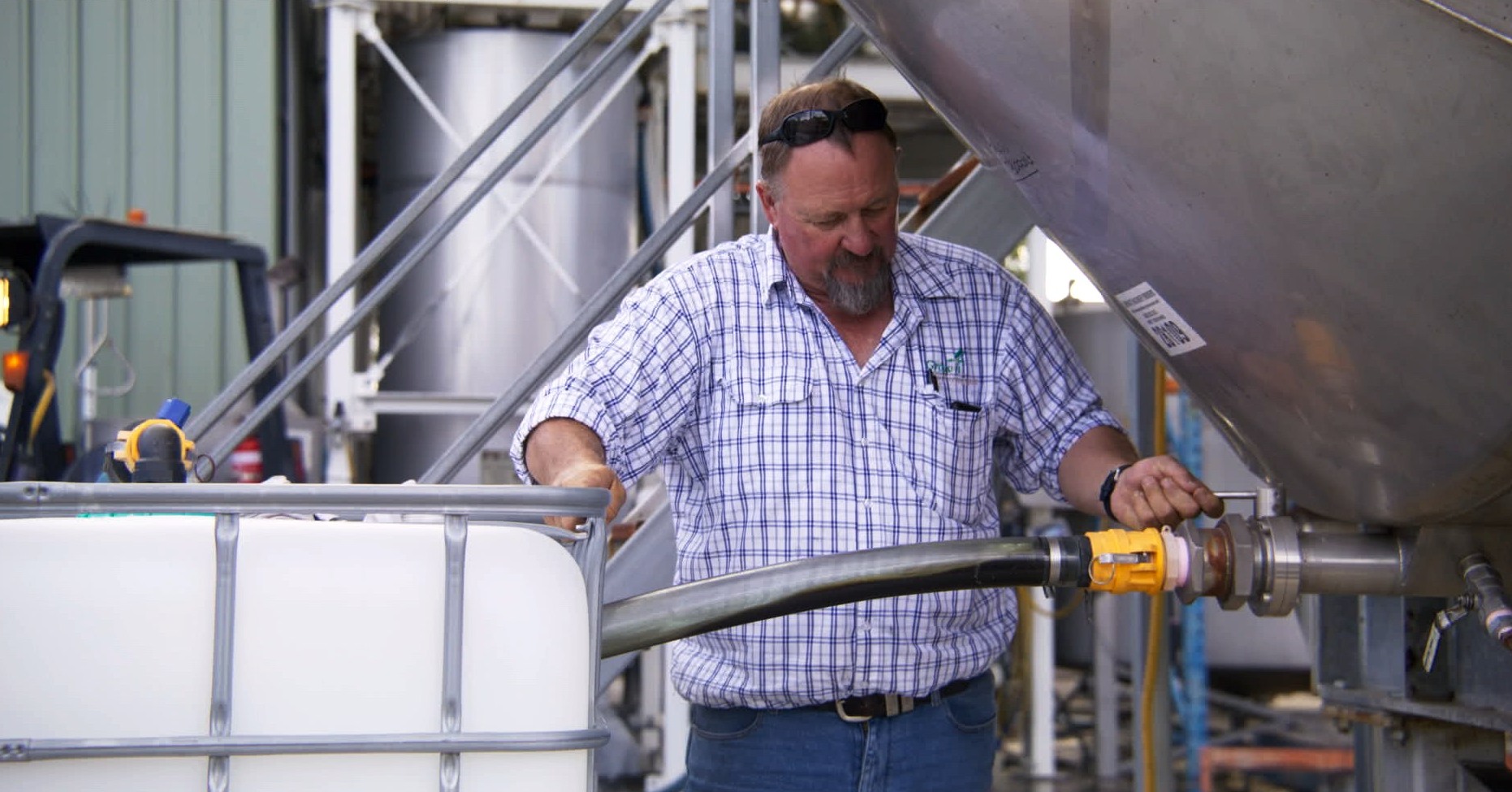
Blood and bone has been spread on Australian paddocks for more than a century - but always dry, always slow. Growth Ag's research team works out how to render the same raw material into a stable, superfine liquid that can be tank-mixed, foliar applied, or banded at sowing.

LiquidBiologicalTrace elements
2000s
The timeline lands here

B&B Superfine. Eight thousand years of blood and bone, in a bottle.

Growth Agriculture's flagship Liquid Blood & Bone - a balanced NPK of 12.5 : 4.5 : 8.5 plus minerals and trace elements, made from bovine by-product. Everything the first farmers of the Fertile Crescent were reaching for, rendered into a liquid that fits a modern spray rig and leaves the soil biology healthier than it found it.

12.5 : 4.5 : 8.5
NPK analysis
100%
Australian made
30+ yrs
In production
Talk to our team →
B&B Superfine Liquid Blood & Bone
B&B Superfine logo
B&B Superfine Liquid Blood & Bone · 12.5:4.5:8.5